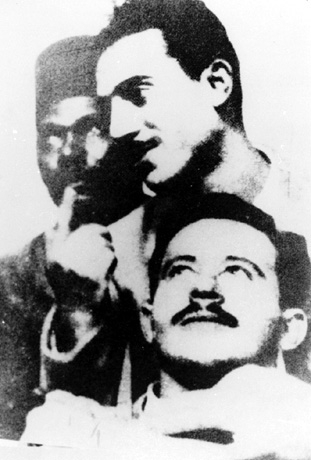
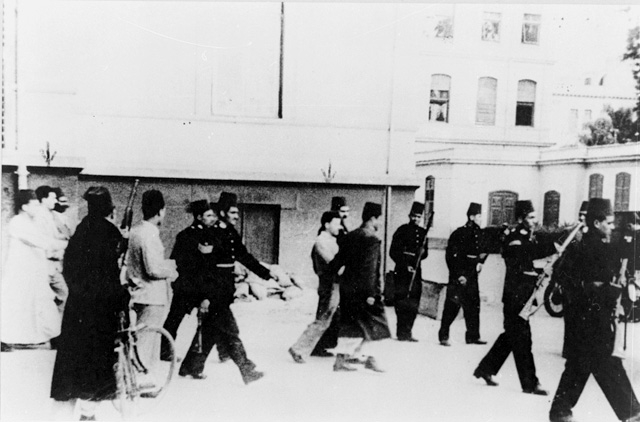
The eighth day of the month of Nisan marks the date the two Eliyahus – two boys of the same name who couldn’t be more different – were executed in Cairo.
Eliyahu Bet-Zuri was born in 1922 to a poor Tel Aviv family that had lived in Palestine for many generations. In 1931, Eliyahu’s father was made postmaster of the city of Tiberius. Eliyahu loved living in the ancient Galilee region and he eagerly devoured the history of his country.
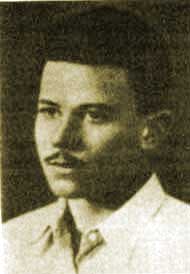
He knew that Israel had been subjugated by foreign powers in the past and that his ancestors had frequently rebelled to win their freedom. That the nation of Israel should once again revolt against an occupier seemed only natural to Eliyahu. By the time he was ten, he had smuggled ammunition for the Hagana militia. The British, insisting that law and order was their concern, refused at the time to allow a Jewish militia to exist and anyone caught with ammunition was sent to prison.
By the time he was twelve, Bet-Zuri had learnt to hate the British. These feelings were only intensified by the arrival of Jewish refugees from Nazi Germany.
Shortly after Eliyahu’s thirteenth birthday, his father was reassigned back to Tel Aviv. Two years later, during the winter of 1937, Eliyahu was recruited into the Etzel (National Military Organization) – an underground movement fighting to free Palestine from British rule. After only a short time of activity in the Etzel, Eliyahu proved himself as a courageous, intelligent and disciplined soldier.
When World War II broke out, the Etzel decided to suspend its anti-British activities in order to assist in the war effort against Germany. Some Etzel leaders, however, maintained that it was the British who were occupying the Jewish homeland and the British who were actively preventing Jews in Europe from being saved.
A group of fighters left the organization to form their own group, Leḥi (Fighters for the Freedom of Israel), and continued the struggle to free Palestine from British rule. Eliyahu Bet-Zuri eventually joined Leḥi and helped to build the group’s Jerusalem branch.
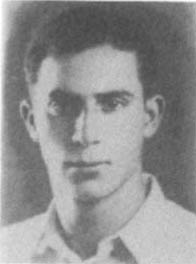
Eliyahu Ḥakim was born in 1927 to a wealthy family of kohanim in Beirut. His father, a fine silk dealer, had always dreamed of returning to the Land of Israel and finally moved his family to the port city of Haifa in 1933. Although the move had been a great financial risk, importing silk proved to be a very lucrative business and in 1936, the family moved into a spacious home on Mount Carmel overlooking the scenic Haifa bay.
Young Ḥakim traveled in fast social circles, often frequenting Haifa’s nightclubs and cafés. Handsome and adventurous, he earned the nickname “Roxy” for his dance moves. Although he appeared to most people as a wild and carefree teenager, Eliyahu was deeply troubled by the oppression of his people under British rule.
Eliyahu Ḥakim joined Leḥi and soon proved himself a reliable soldier. Despite his privileged upbringing, he adapted well to underground life and even became known as the organization’s best marksman.
Ḥakim was selected, along with Eliyahu Bet-Zuri, to travel to Cairo and assassinate Lord Moyne – the highest ranking British official in the Middle East.
The mission was successful but the boys were arrested. On trial, the two Eliyahus used the courtroom as a platform to educate the world to their struggle for freedom. Bet-Zuri had been selected for this mission precisely because of his exceptional ability to articulately express Leḥi’s ideological positions. It was decided that if captured, Bet-Zuri would be the best fighter to convey Israel’s struggle for freedom to the world.
At one point Ḥakim told the judges: “We accuse Lord Moyne and the government he represented of murdering hundreds and thousands of our brothers and sisters. We accuse them of stealing our homeland and our property… Where is the law by which they should be tried for their crimes?”
Impressed with the behavior of the two Eliyahus during their trial, Egyptian university students – many affiliated with the Muslim Brotherhood – began demonstrating that the Jewish assassins be pardoned. But the British had placed heavy pressure on the Egyptian courts and both Eliyahus were sentenced to death.
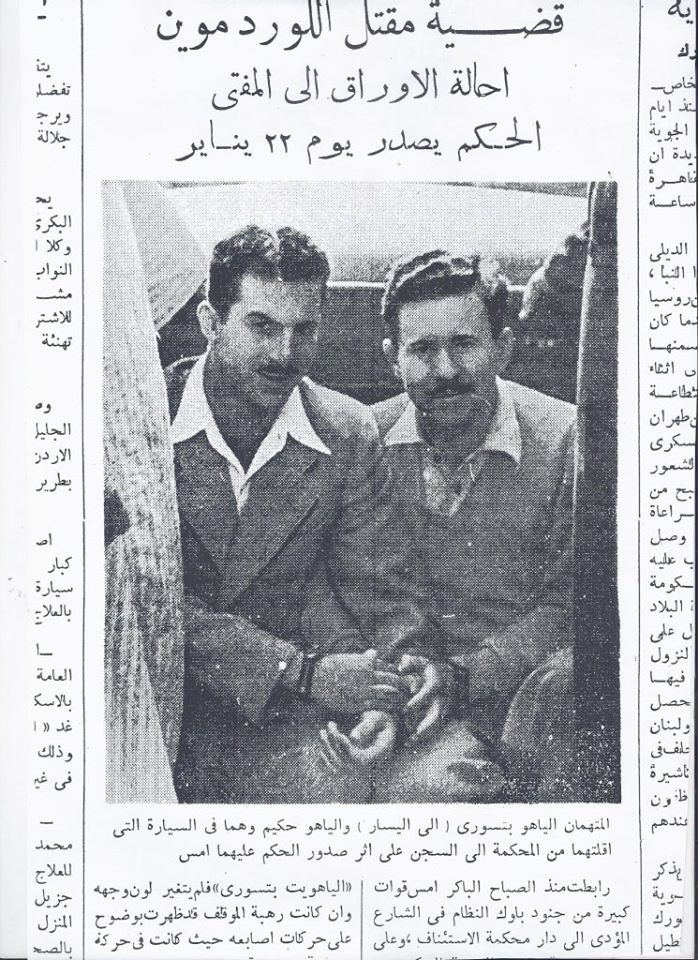
When approaching the gallows for execution, Ḥakim began to laugh. When a guard questioned his unusual demeanor before death, he responded: “I am laughing to the next generation who will see a Hebrew flag over Jerusalem.”
Both Eliyahus sang the HaTikva and and then calmly allowed the executioner to do his job.
The hangman, who was so overwhelmed by the composure of the two fighters, later remarked that after twenty years as an executioner, this was the first time that he had felt like a murderer.